

Showers and tubs
Why Your Shower Drain Keeps Slowing Down, and How to Keep It Flowing
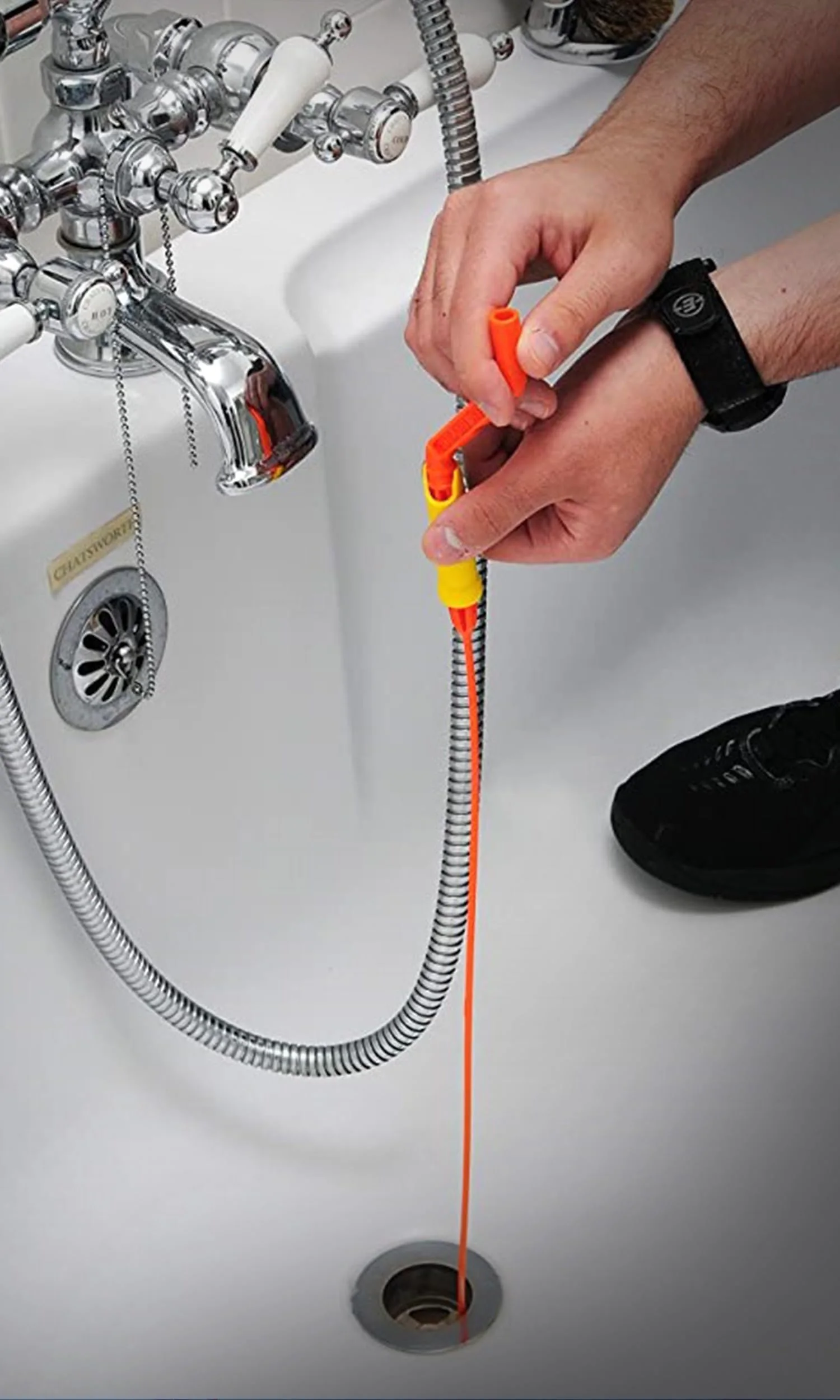
A shower that drains slowly gives you a warning before it gives you a flood. First the water covers the floor around the drain for a minute after you turn the tap off. Then it reaches your ankles while you rinse. The cause is almost always the same, and it sits closer to the surface than most people think.
What is in a slow shower drain
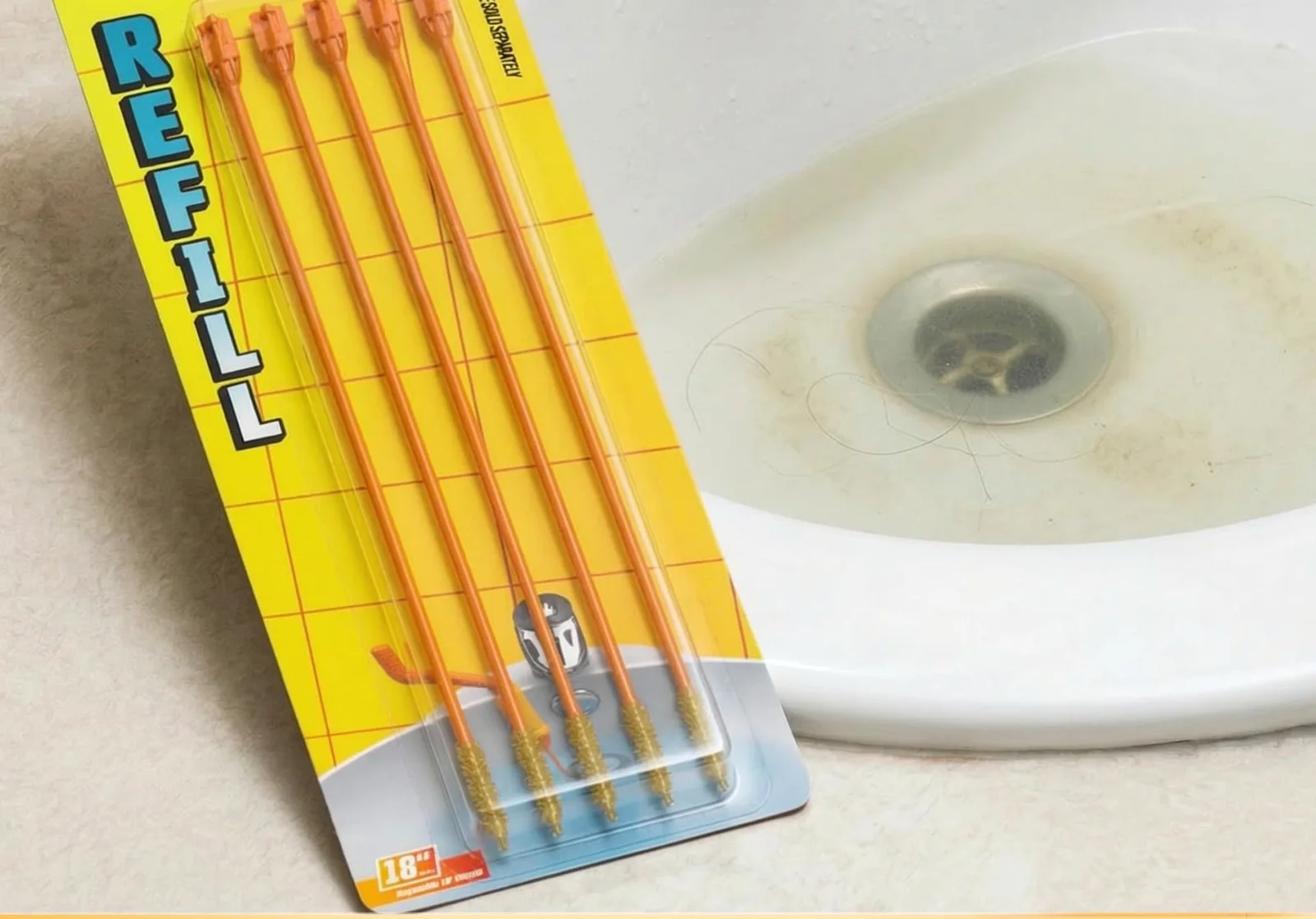
Every shower sends hair down the drain. Some of it catches under the strainer, some of it on the first bend of the pipe, where the water has to turn. A few strands would let water through, but soap scum and conditioner coat them, and each new strand sticks to the last.
What forms is a mat rather than a plug: hair glued together with soap, sitting across the pipe like felt. Water seeps through it, more slowly every week. You rarely see it from above, because the strainer hides it.
That shape matters for how you clear it. A mat of hair does not need to be dissolved. It needs something that can catch it and bring it up in one piece.
Strainers, stoppers and the overflow
Before you start, look at what covers your drain. A shower strainer is either held by a screw in the center or snapped into the opening. Either way, you can usually leave it where it is: the Drain Weasel wand is about an eighth of an inch thick and goes through the slots of most strainers.
A tub is different in one way that matters. Most tubs have a stopper in the drain and an overflow plate on the end wall, and the overflow adds a length of pipe before the trap. A clog in a tub can sit further along than a clog in a walk-in shower, and that is where wand length starts to count.
Clearing it with the wand
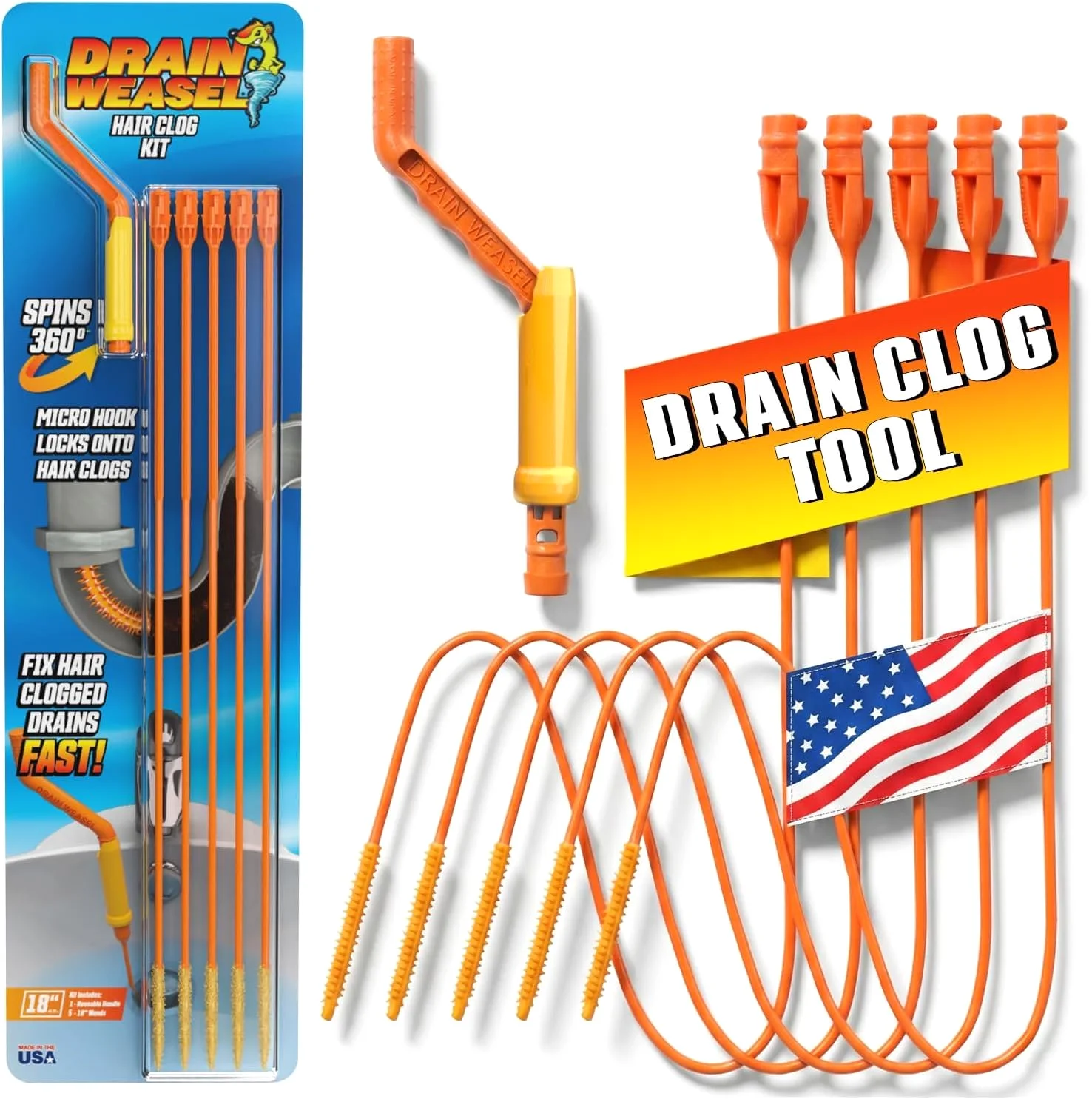
- Click a fresh wand into the Drain Weasel handle until it locks.
- Push the wand down through the slots of the strainer, or past the stopper of a tub.
- Let it slide down until it stops. Do not force it.
- Turn the handle a few times, so the micro-hooks wind the hair around the wand.
- Pull it straight up, over a bag or the bin.
- Click the wand off the handle and drop it in the bag with the clog on it.
- Run the shower and watch the floor. Standing water means another pass with a fresh wand.
Nothing in those steps asks you to unscrew a strainer, pour anything in, or touch the hair. The U.S. Environmental Protection Agency, in its advice for homes on a septic system, puts it plainly: skip chemical drain openers for a clogged drain and use boiling water or a drain snake instead.

When 18 inches is not enough
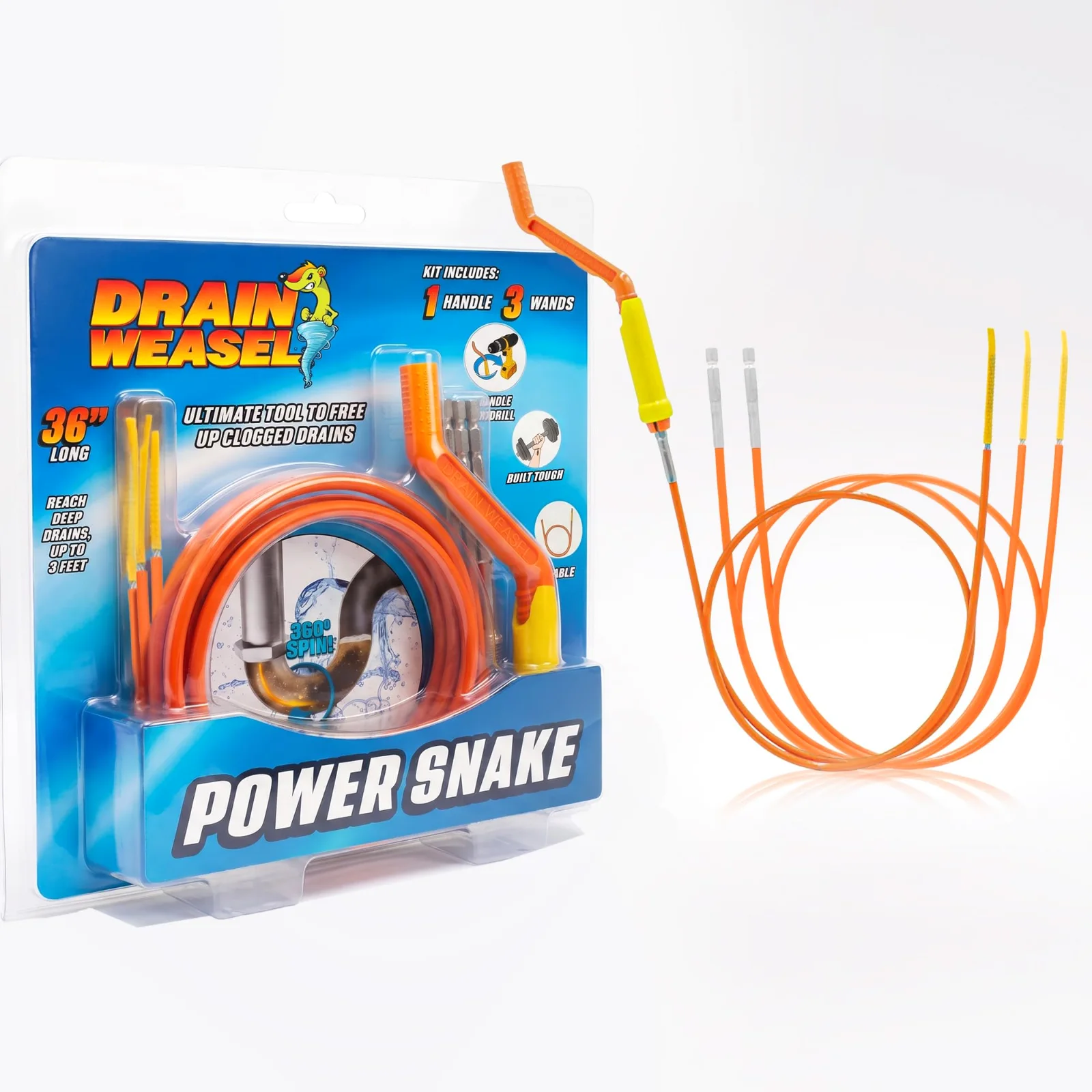
If an 18-inch wand comes up clean and the water still stands, the hair is further down. FlexiSnake makes three longer tools for that, and they differ in how they are turned.
| Tool | Wand length | Turned by | Wands in the pack |
|---|---|---|---|
| Drain Weasel kit, starter kit, refills, Pro | 18 in | Hand, quick-connect handle | 1 to 10 |
| Drain Weasel Max | 20 or 30 in | Hand, the same handle | 2 |
| Drain Weasel MAX Power | 30 in | Drill, with the connector | 1 |
| Drain Weasel PowerSnake | 36 in | Hand or drill | 3 |
The Max is the natural next step for a tub, because it uses the handle you already have. The PowerSnake runs its 36-inch wands on a coated, flexible cable that bends through the trap. It comes with a handle and a drive coupler for a standard drill, and its card is clear about the drill: low speed, clockwise only, so the hooks wind the hair instead of spinning against the pipe.
A routine that keeps it flowing
The best time to clear a shower drain is at the first sign of standing water. A thin mat comes up on one wand. A thick one, left for months, can take two.
How many wands you go through depends on the hair in the house. One person with short hair might use a wand now and then. Two or three people with long hair sharing one shower will use them often enough that a refill card of ten is worth keeping in the cabinet. The refill wands fit the handle from any Drain Weasel kit.
If the same drain needs a wand every week, look at the Pro Drain Weasel. Its wands have a ribbed shaft and stiffer hooks, and you rinse them and use them again instead of throwing them away.

When to stop and call a plumber
A hair tool clears hair. It does not clear a pipe that is blocked by something else, further down the line. Stop and call a licensed plumber if a longer wand comes back clean and the water still stands, or if water rises in another fixture, the toilet or the tub, when the shower drains. Both mean the blockage is in a pipe the shower shares with the rest of the house.
Until then, the job stays small: a wand, a turn of the handle, a clog in the bin.